
What Is a Wallet-as-a-Service API? (And Why It's Not Just a Bank Account)
When money sits in a bank account, that bank is the one holding a banking licence and answering to a banking regulator. When money sits in a wallet, the fintech company offering the wallet usually is not the licence holder.
Ask ten fintech founders to describe a digital wallet, and eight of them will describe a bank account with a nicer app. The confusion is understandable. It is also costly because founders who build product plans, compliance strategies, and investor pitches around the wrong model tend to discover the gap at the worst possible moment, usually mid-due diligence or partway through a licensing review. Bummer.
A Wallet-as-a-Service API is not a bank account. Understanding what it actually is changes how a founder should think about licensing, liability, product speed, and what "launch" really means for a financial product. This piece covers the definition and the mechanics. Later pieces in this series cover how WaaS compares to neobanking and Banking-as-a-Service, and how to choose a provider.
What a Wallet-as-a-Service API Actually Is
A Wallet-as-a-Service API, usually shortened to WaaS API, is a piece of financial infrastructure that lets a business create and manage digital wallets for its users through code, rather than building that wallet system from scratch. A wallet, in this context, is a stored-value account inside an application. It holds a balance, moves money in and out, and often supports several currencies or asset types at once.
Instead of a company hiring engineers to build ledgers, manage deposits, handle payouts, and work out currency conversion from zero, a WaaS provider exposes those capabilities through an API. The company calls that API, and a wallet exists. Deposits, payouts, and liquidity swaps become a handful of API calls rather than a multi-year infrastructure project.
This is the part non-technical founders often miss. A Wallet-as-a-Service API is not a product a consumer sees. It is the plumbing underneath a product a consumer sees. A ride-hailing app that lets drivers hold earnings and cash out instantly is probably running on a WaaS API behind the scenes. A payroll platform that gives contractors a spendable balance is doing the same thing. The wallet itself stays invisible to the end user, who only experiences a balance, a way to add money, and a way to move it.
This is what people mean by digital wallet infrastructure for fintechs… the layer of code and compliance sitting beneath the visible product, doing the work that used to require a banking team to build in-house.
How Does a Wallet-as-a-Service API Actually Work?
A Wallet-as-a-Service API works by separating three things that used to be bundled together inside a bank: the ledger, the compliance layer, and the user interface.
- The ledger is the record-keeping engine. Every wallet needs one, whether it belongs to a single consumer or an entire business. It tracks balances, records transactions, and makes sure money leaving one wallet actually arrives in another. In a WaaS setup, the provider builds and maintains this ledger. The client company does not need to understand how double-entry accounting works at scale. It only needs to call the right endpoint.
- The compliance layer sits next to the ledger and handles the parts of financial services that regulators care about most: identity verification, sanctions screening, transaction monitoring, and anti-money laundering checks. A mature WaaS provider bakes these directly into the API, so that when a wallet is created, or a transaction is initiated, the checks run automatically instead of being bolted on afterwards by the client company's own team. This is the KYC/AML compliance layer founders hear about, and it is one of the more valuable parts of the whole arrangement.
- The user interface is usually the only part the client company builds itself. This is the app screen showing a balance, a transfer button, and a transaction history. Everything behind that screen, from the ledger to the currency conversion to the payout rails, runs through the API.
In practice, a WaaS integration looks something like this. A business signs up with a provider and receives API credentials. Its developers call a "create wallet" endpoint whenever a new user signs up, generating a wallet tied to that user inside the provider's ledger. From there, the business can call endpoints to accept deposits, trigger payouts, check balances, or convert between currencies, sometimes including crypto-to-fiat conversion depending on the provider. The provider absorbs the messy parts: routing money correctly across banking partners, keeping records straight, and running compliance checks quietly in the background.
This is also what is being referred to when concepts like embedded wallet APIs or wallet orchestration are being discussed. Orchestration, for one, simply refers to the coordination work of moving money correctly across multiple currencies, partners, and rails without the client company managing each of those relationships directly.
A good WaaS API absorbs that complexity so a small team can offer a wallet product that would otherwise demand a far larger engineering and compliance staff. Some providers extend this same orchestration logic to payment routing more broadly, which is where the term payment orchestration usually comes from.
Is a Digital Wallet the Same as a Bank Account?
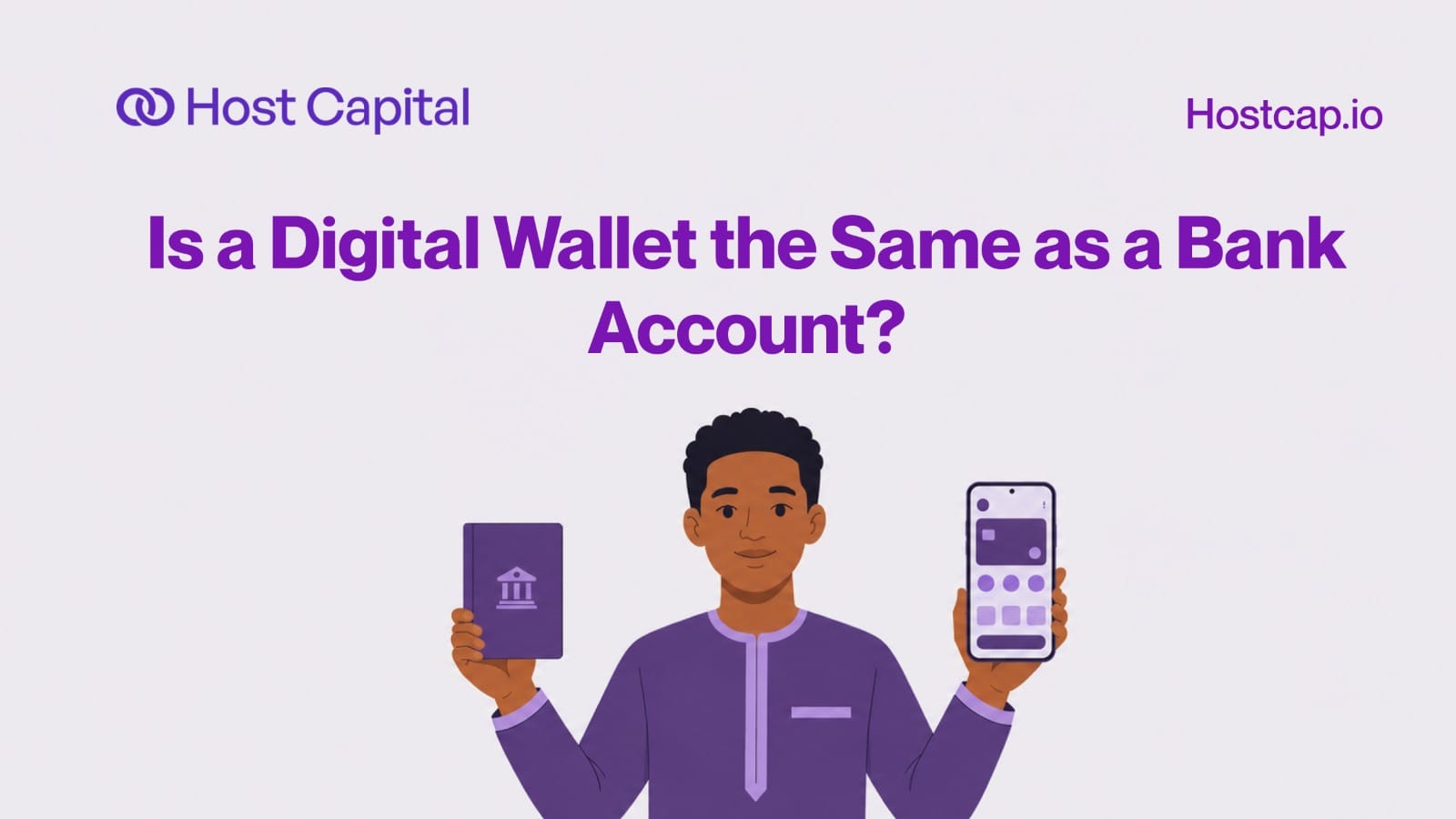
No. A bank account is a direct claim against a licensed depository institution, protected by deposit insurance and governed by banking law. A wallet built on a Wallet-as-a-Service API is usually a claim against a fintech company, which in turn holds the underlying funds at a bank or an electronic money institution, in what is often called a pooled or safeguarding account.
When money sits in a bank account, that bank is the one holding a banking licence and answering to a banking regulator. When money sits in a wallet, the fintech company offering the wallet usually is not the licence holder. Instead, it has an arrangement with a licensed partner who actually custodies the funds, while the fintech handles the product experience.
This is why a wallet balance and a bank balance can look identical on a phone screen while sitting on completely different legal foundations underneath. A user depositing money into a wallet is trusting a chain of relationships: the app they are using, the WaaS provider behind that app, and the licensed institution safeguarding the money at the bottom of that chain. A user depositing money into a bank account is trusting one directly licensed, directly regulated entity.
None of this makes wallets unsafe, however. It just means the protections work differently, and a founder building on wallet infrastructure needs to understand exactly where the money sits and who is accountable for it, rather than assuming a wallet is basically a bank account and moving on. The same logic applies to virtual wallet vs bank account comparisons more broadly: the balance display is the same, the legal plumbing underneath is not.
This is also where API-first banking infrastructure earns its keep. A fintech infrastructure provider that treats custody, ledger management, and compliance as core parts of the API, rather than as afterthoughts layered on top, gives a founder a much clearer picture of where responsibility actually sits, which matters enormously once real money and real regulators are involved.
What Comes Next
A Wallet-as-a-Service API gives a business the plumbing to hold, move, and convert money on behalf of its users, without that business becoming a bank. That is the part most founders get right intuitively. Where the confusion usually creeps in is the next question: if a wallet isn't a bank account, is it a neobank? And if not, what actually is the difference between Banking-as-a-Service and Wallet-as-a-Service?
Part 2 of this series, WaaS vs. Neobanking vs. BaaS: Untangling the Confusion, will answer exactly that.
Part 3, How to Actually Launch a Wallet: Compliance, Use Cases, and Choosing a Provider, will then cover the compliance layer in more depth, common real-world use cases, and what to look for when evaluating a provider.