
How to Actually Launch a Wallet: Compliance, Use Cases, and Choosing a Provider
Not all WaaS providers are built the same way, and the differences matter more once a product is live and processing real transactions. When evaluating your options, look for these four pillars:
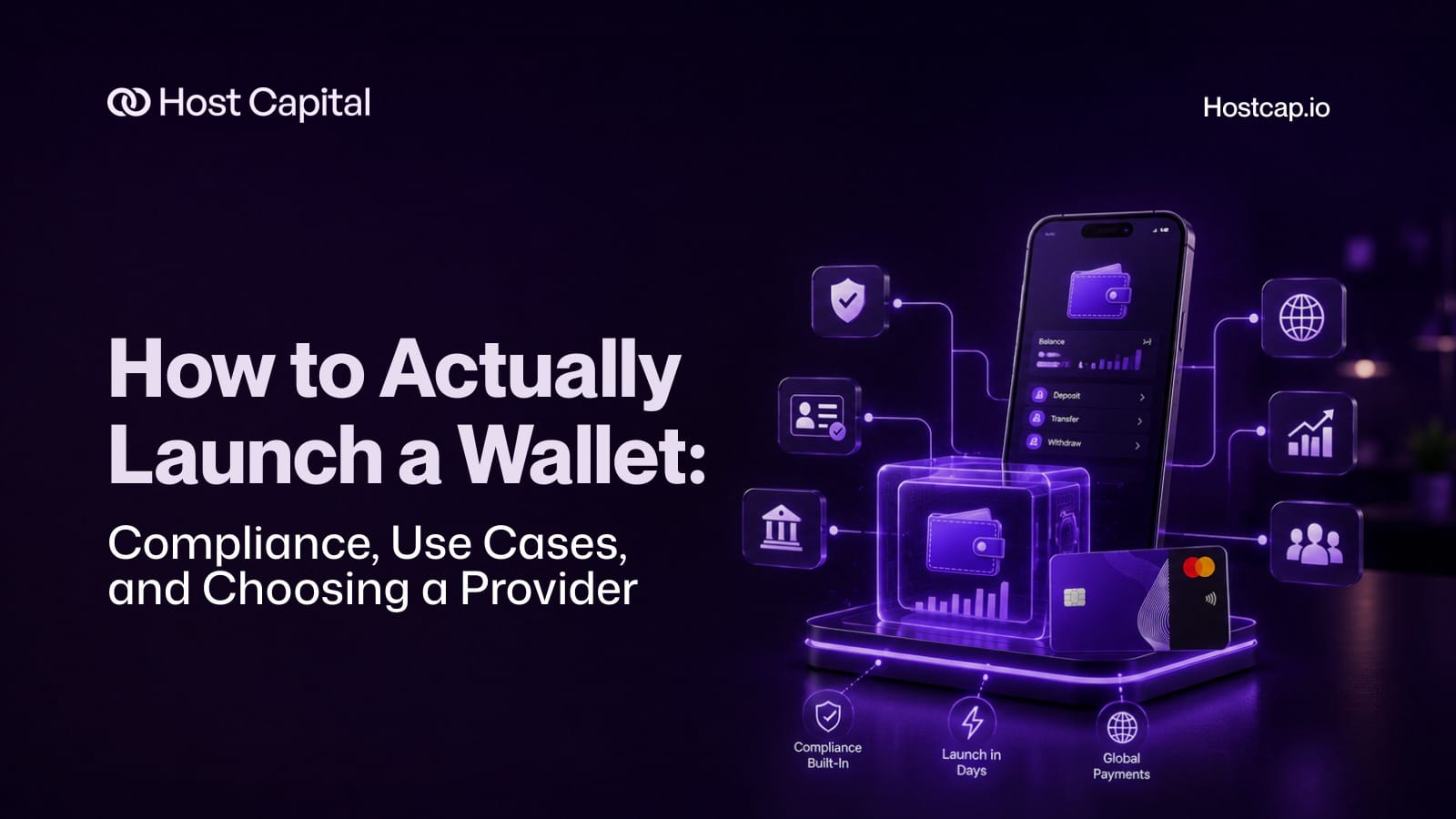
Once a founder understands what a Wallet-as-a-Service API is and how it differs from a neobank or a full BaaS stack, the next question is practical: what does it actually take to launch one responsibly, and how do you pick a provider that will not become a liability six months in? This piece covers the compliance layer underneath a wallet, where wallets show up in real products, and what to look for before signing with a provider.
Security and Compliance: The Part Most Founders Underestimate
Founders evaluating wallet infrastructure often focus first on speed and cost, which makes sense. But the compliance layer underneath a wallet is where most of the real risk sits, and it is worth understanding before signing with any provider.
Every wallet, regardless of size or purpose, touches money laundering and fraud risk the moment it accepts a deposit. Regulators expect KYC checks at onboarding, ongoing AML monitoring across transactions, and a documented process for flagging suspicious activity. A startup that tries to build this from scratch is signing up for a specialised, expensive function that has nothing to do with its actual product.
This is why the strongest WaaS providers treat compliance as something baked into the API layer itself, rather than a separate system a client company has to bolt on afterwards. When identity checks, screening, and transaction monitoring live inside the same infrastructure that handles deposits and payouts, compliance becomes something that happens automatically as a byproduct of normal wallet activity, rather than a parallel workstream a startup has to staff and maintain on its own.
The same logic applies to card programmes built on top of wallet infrastructure. A wallet provider that also issues virtual or physical cards can extend that embedded compliance further, using tools such as programmatic Merchant Category Code blocking to restrict what a card can be used for at the point of authorisation, rather than catching misuse after the transaction has already settled. For a startup with no compliance team of its own, this difference between reactive and embedded controls is often the difference between a viable card programme and an unmanageable one.
Custody matters here too. Wallets generally fall into two categories: custodial, where the provider holds and safeguards the underlying funds on the user's behalf, and non-custodial, where the user retains direct control over their own funds or keys. Most consumer and business fintech wallets are custodial, since non-custodial models push far more responsibility, and far more risk, onto the end user. A founder should know which model their provider offers, since it changes who is legally responsible for the funds sitting in every wallet the platform creates.
Common Use Cases for Wallet-as-a-Service APIs
Wallet infrastructure shows up in more places than most founders initially expect, precisely because a wallet is such a general-purpose building block.
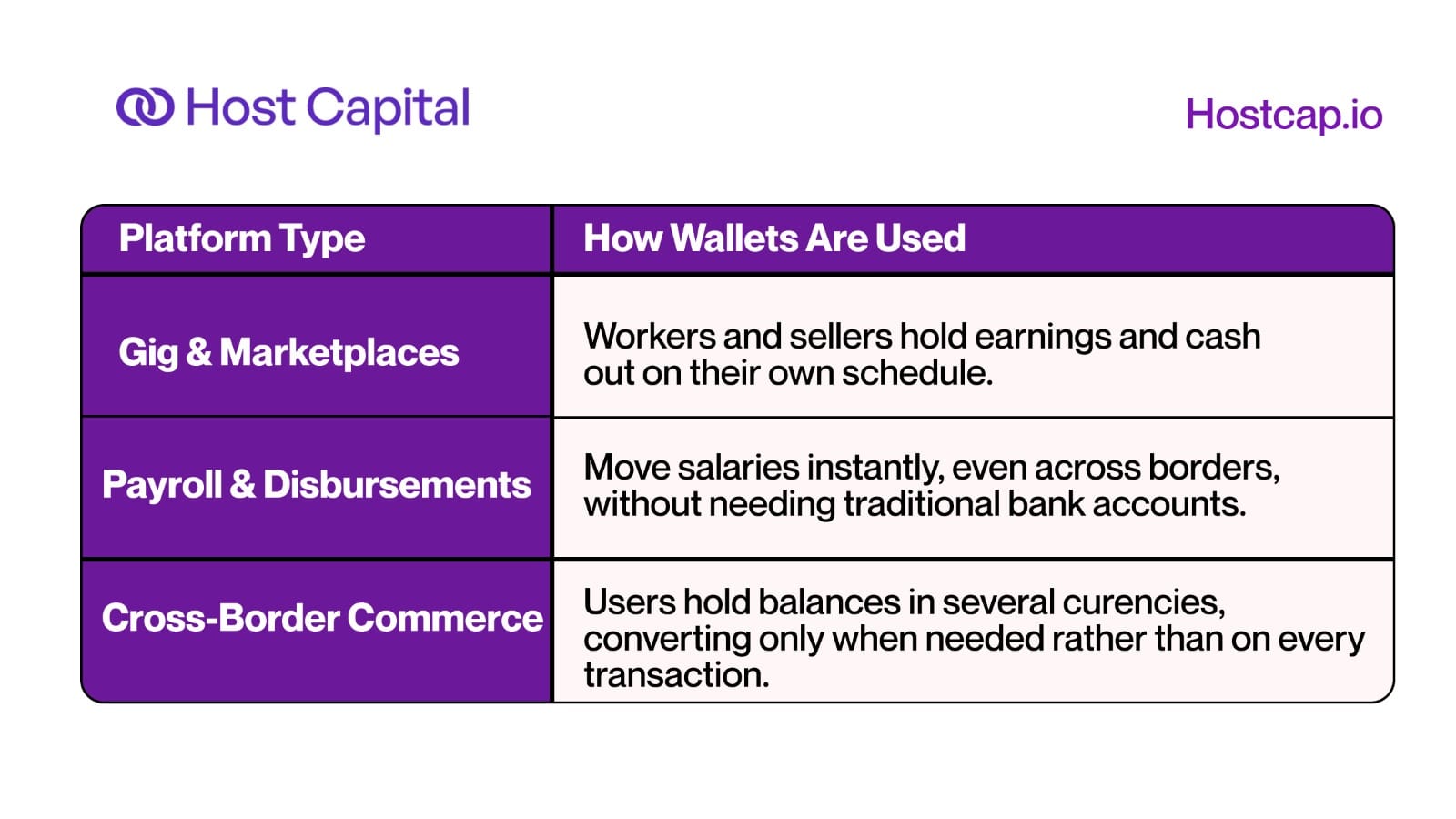
Increasingly, wallets are also becoming the settlement layer for stablecoin and crypto-adjacent products. A fintech offering both fiat and stablecoin balances inside the same wallet, with instant conversion between the two, is relying on the same underlying wallet architecture described in Part 1, just extended to cover a wider set of asset types. This is part of why the line between traditional wallets and crypto wallets keeps blurring: the ledger and compliance logic underneath are conceptually the same, even when the assets sitting on top look different.
How to Choose a Wallet-as-a-Service Provider
Not all WaaS providers are built the same way, and the differences matter more once a product is live and processing real transactions. When evaluating your options, look for these four pillars:
- Deeply Embedded Compliance: Look at whether compliance lives inside the API itself or if it is just a bolt-on dashboard. A provider that treats KYC, AML monitoring, and fraud controls as first-class parts of the transaction flow will save you from having to build and staff that function independently later.
- Broad Currency & Corridor Coverage: A single integration should support a wide range of currencies and international payment corridors. This prevents you from having to stitch together multiple new local partners every time your business expands into a new market.
- True Speed to Launch: Pay attention to the required integration work. While some providers demand lengthy onboarding processes and custom builds measured in months, modern infrastructure is designed to take a founder from initial signup to a working wallet product in a matter of days.
- A Genuinely Unified Stack: You want wallets, card issuing, cross-border settlement, and crypto on/off-ramps under one roof, sharing a single integration. Having to manage five different vendor relationships just to deliver one coherent product experience defeats the primary purpose of using infrastructure in the first place.
Where Host Capital Fits
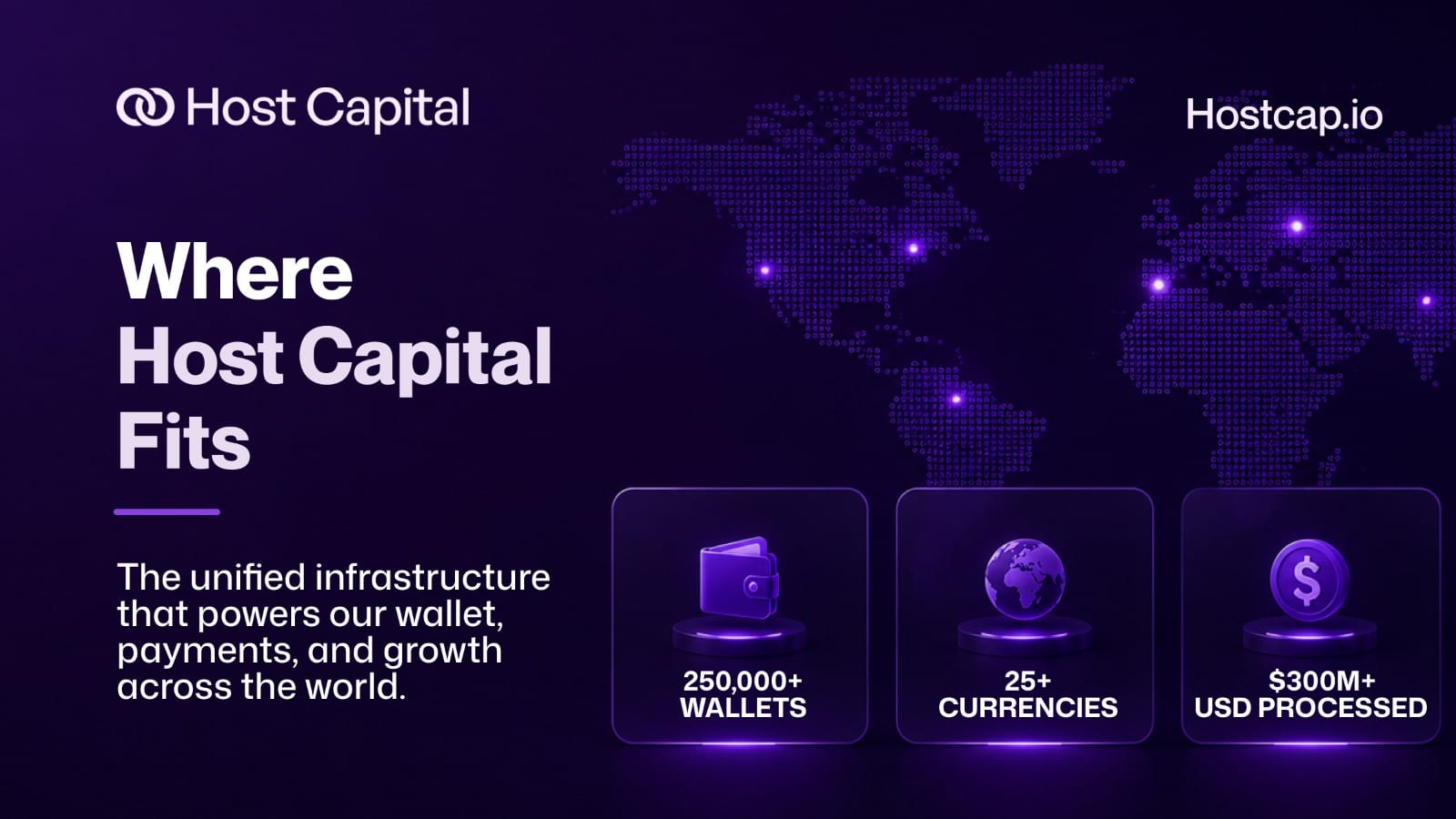
Host Capital was built around this exact gap: a single API stack covering wallets, card issuing, cross-border payments, and crypto on- and off-ramping, rather than forcing fintech founders to assemble those pieces from separate vendors.
The Host Capital Wallet-as-a-Service product lets businesses launch enterprise-grade digital wallets that handle deposits, payouts, and liquidity swaps without the operational overhead of building that infrastructure internally. Compliance sits inside the API layer itself as part of the wider Circle Alliance compliance ecosystem, with AML and CFT checks embedded directly rather than managed as an external process. For businesses that also need card issuing, HostCap supports virtual and physical cards across Visa, Mastercard, Verve, and Afrigo, with proactive risk controls such as automated MCC blocking built in from the start.
The platform connects Africa, Europe, Asia, and the Middle East, supporting more than 25 currencies through a single, unified liquidity network, and is designed for developers to integrate, test, and launch a fully compliant wallet product in under 48 hours rather than months. To date, the platform has securely processed more than $300 million USD, created more than 250,000 wallets, and supports more than 40 fintechs, startups, and enterprise clients, with 99% uptime across its APIs and dashboards.
Frequently Asked Questions
Is a digital wallet the same as a bank account?
No. A bank account is a direct claim against a licensed bank, typically protected by deposit insurance. A wallet is usually a claim against a fintech company, which safeguards the underlying funds through a licensed banking or e-money partner.
What's the difference between Wallet-as-a-Service and a neobank?
A neobank is a consumer-facing brand offering banking-like services. Wallet-as-a-Service is the infrastructure that can power that brand, or power a wallet feature inside a completely different kind of product. One is a product; the other is the plumbing underneath it.
What is the difference between BaaS and WaaS?
Banking-as-a-Service typically provides full banking primitives, including numbered accounts and cards, usually through a licensed bank partner. Wallet-as-a-Service is narrower, focused specifically on stored-value balances that move money without necessarily issuing a full bank account for every user.
Do I need a banking licence to launch a wallet?
Generally, no. A Wallet-as-a-Service provider that already holds the relevant licences, or partners with an institution that does, absorbs that regulatory burden so the client company does not need to become a licensed entity itself.
Can a fintech startup offer wallets without becoming a bank?
Yes. This is the core value proposition of the WaaS model: the startup focuses on its product and customer relationship, while the infrastructure provider handles custody, licensing relationships, and compliance underneath.
How does a Wallet-as-a-Service API actually work?
It separates the ledger, the compliance layer, and the user interface. The provider manages the ledger and embeds compliance checks directly into the transaction flow, while the client company builds the user-facing app on top, calling the API to create wallets, accept deposits, and trigger payouts.
How long does it take to launch a digital wallet with an API?
It varies by provider, but modern API-first infrastructure is often built for founders to go from integration to a fully compliant, live wallet product in a matter of days rather than months. HostCap, for example, is built for developers to launch in under 48 hours.
This is Part 3 of a three-part series on Wallet-as-a-Service infrastructure. Part 1, What Is a Wallet-as-a-Service API?, covers the basic definition and mechanics. Part 2, WaaS vs. Neobanking vs. BaaS, covers how the category differs from neobanking and Banking-as-a-Service.