Long Reads How to Evaluate a Fintech Infrastructure Vendor: 10 Questions Every Team Should Ask Before Signing A payments company that picks the wrong partner for wallets, card issuing, or cross-border settlement can lose months to a migration nobody budgeted for, or worse, lose customer trust after an outage nobody saw coming.
Industry Trends How to Actually Launch a Wallet: Compliance, Use Cases, and Choosing a Provider Not all WaaS providers are built the same way, and the differences matter more once a product is live and processing real transactions. When evaluating your options, look for these four pillars:
Fintech WaaS vs. Neobanking vs. BaaS: Untangling the Confusion A neobank is the brand a customer sees. Banking-as-a-Service and Wallet-as-a-Service are two different flavours of infrastructure sitting underneath that brand, or underneath a wallet feature bolted onto a completely different kind of product.
Industry Trends What Is a Wallet-as-a-Service API? (And Why It's Not Just a Bank Account) When money sits in a bank account, that bank is the one holding a banking licence and answering to a banking regulator. When money sits in a wallet, the fintech company offering the wallet usually is not the licence holder.
Educational Embedded Compliance: How AML/CFT Controls Belong in the API Layer Applied to AML/CFT compliance, this means a programme can maintain robust suspicious activity monitoring at transaction volumes that would overwhelm a manual team, without proportionally scaling headcount.
Industry Trends The MCC Blocking Layer: How Programmatic Card Controls Work in Practice For a startup aiming to launch a card programme in 48 hours, the question is not whether to build a compliance function. The question is whether to build one from scratch or to launch on infrastructure where the first tier of that function is already embedded in the API layer.
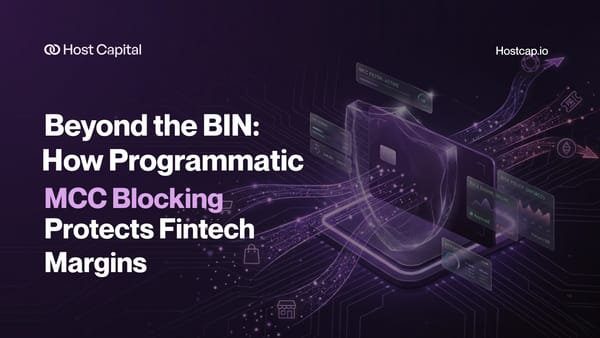
Fintech Beyond the BIN: How Programmatic MCC Blocking Protects Fintech Margins Today's exploits target the space between authorisation and settlement: the grey zone where a transaction is approved before anyone has seriously evaluated what type of merchant accepted it, or whether that merchant category should have been accessible to that cardholder at all.
Educational Gamification in Fintech: The Growth Loop Every Crypto Exchange Needs (With a Real-World Example) Building a crypto exchange or DEX in 2026 means competing in one of the most crowded user-attention markets in financial technology. Switching costs are near zero. A user can fund a second wallet in minutes. There is no lock-in built into the infrastructure.
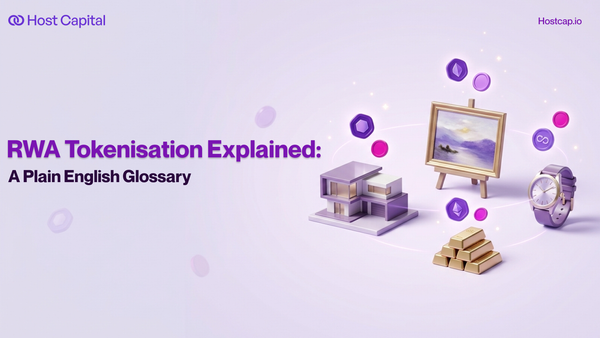
Industry Trends RWA Tokenisation Explained: A Plain English Glossary What is RWA tokenisation, and why does a recent SEC ruling change everything for global investors? Don’t let terms like 'DTC pilot' and 'on-chain settlement' slow you down. Here is your definitive, jargon-free guide to the tech rewriting the rules of the stock market.
Industry Trends Tokenised Stocks Are Here: What the SEC's Nasdaq Ruling Means for Non-US Investors There is a particular kind of frustration that comes from watching wealth build on the other side of a wall you cannot climb. For most of the past decade, that wall was the American stock market. You could see it. You could read about it. But you couldn't touch it.
Long Reads AML & CFT Compliance in Payment Systems: What Fintech Leaders Must Get Right With over $1.23 billion in fines issued to payment platforms in 2025 alone, the "growth at all costs" era is over. Learn how fintech founders are structuring AML & CFT compliance to scale securely before regulators come knocking.
Announcements Featured HostCap Joins the Circle Alliance Program as Stablecoin Demand Accelerates Across Africa With stablecoin-based B2B payments surging globally, HostCap has officially joined the Circle Alliance Program to power the next generation of USDC-based cross-border payments for fintechs and enterprises across Africa.